Kabrak’s Path to Healing
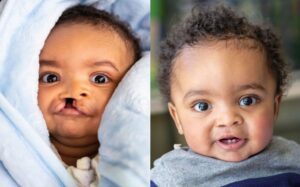
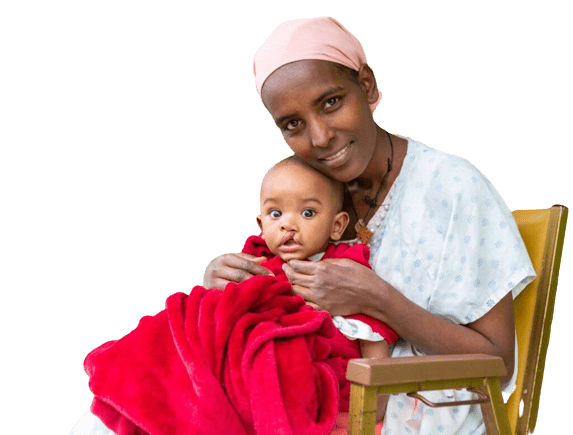
The CURE Children’s Hospital of Ethiopia team first met Kabrak in his mother’s arms, lying quietly beside her bed in 2024. As they usually do, the team approached his mother and asked about her son, where they came from, what brought them to CURE, and what their journey had been like.
Kabrak’s mother looked at her baby and began to tell us his story.
“I found out about my baby’s condition after giving birth to him. I was very shocked, especially since he is my first child,” recalls Habtenesh, her voice echoing the quiet heartache that many mothers face when unexpected medical challenges arise.
Four years ago, Habtenesh became a mother for the first time. Like any new mother, she had imagined holding her newborn for the first time. But when Kabrak was born with a cleft lip and a cleft palate, the happiness of becoming a mother was suddenly mixed with fear and uncertainty. She did not know what it meant. She did not know if her baby would be able to eat properly, speak normally, or grow up like other children.
Children born with cleft lip and palate can face not only physical challenges but also stigma and misunderstanding. Some families face whispers, judgment, and beliefs rooted in superstition rather than medical understanding. For a new mother holding her first child, that can make an already frightening situation feel even heavier.
But then, Habtenesh found something she desperately needed…
reassurance.
Thankfully, the doctors at the hospital where she gave birth helped her understand that Kabrak’s condition was treatable. They answered her questions, gave her the information she needed, and most importantly, gave her hope. This hope gave Habtenesh and her husband the strength to keep looking for a solution.
They began searching for treatment options and eventually wound up on Smile Train’s webpage. Through Smile Train’s local partners, they were given information about healthcare facilities that could provide cleft care. But one name stood out clearly above the rest: “CURE Children’s Hospital of Ethiopia.”
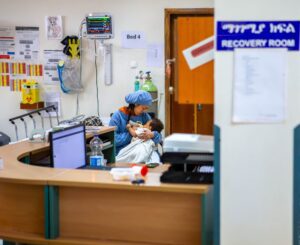
“We received the most positive feedback about the hospital from previous patients,” Habtenesh explains. Hearing firsthand accounts of the high-quality, compassionate care at CURE Ethiopia gave the parents the confidence they needed to choose us for their son’s medical journey.
Beyond Surgery
At CURE Ethiopia, cleft care is designed to support the child and the family throughout their journey.
For infants, this can begin with nutritional support and specialized bottles to help them feed safely and gain enough weight for surgery. Mothers receive counseling and guidance on feeding and caring for their babies. As children grow, they can receive speech therapy, speech surgery, ENT (Ear, Nose, and Throat) care, and ongoing follow-up to ensure they continue to develop well.
Remarkably, every single one of these comprehensive services is 100% sponsored. Thanks to the incredible generosity of donors and partners like Smile Train, families never have to worry about the financial burden of this lifelong care.
“Seeing Other Children Gave Me Hope”
Walking through the doors of CURE Ethiopia can be an emotional experience for parents who have hidden away from judgmental neighbors. For Habtenesh, seeing a vibrant community of other families on the exact same path brought an immediate sense of relief.
“Seeing other children receive treatments has given me more hope that my son’s treatment will also be successful,” she says, watching over little Kabrak.
Kabrak was only four months old. His journey is just beginning, but already, his story is a reminder of what happens when parents are given the information, care, and support they need. Habtinesh was carrying hope.
And sometimes, that is where a child’s healing begins.
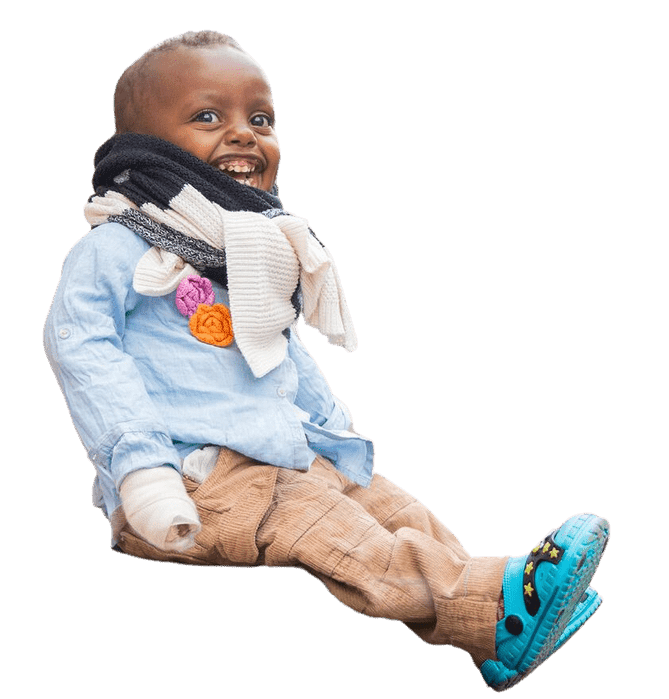
Kabrak’s Journey of Healing
Kabrak’s multi-year recovery journey beautifully illustrates the CURE care in action, showing how a child transitions from vulnerability to wholeness. His complete care began with vital nutritional support and specialized infant bottles to help him swallow safely and gain weight for his initial surgeries to close the gap in his lip and the roof of his mouth.
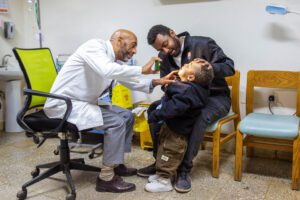
As he grew, the care transitioned seamlessly into long-term medical monitoring, where his surgeon, Dr. Tesfaye, celebrated excellent early progress, noting that food and fluids were no longer accidentally leaking into his nose and that his mouth had healed beautifully. Even when a routine check-up later revealed an unexpected small gap opening back up in the roof of his mouth, the hospital’s support system immediately adapted, and his mother’s lingering anxieties turned to cheer as the team quickly scheduled a successful follow-up surgery.
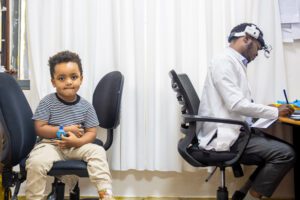
The final phase of this lifelong care plan was realized when CURE Ethiopia’s ear, nose, and throat specialist, Dr. Abebayhu, stepped in to evaluate his progress and plan a specialized minor ear surgery, placing tiny ventilation tubes in his eardrums, to definitively clear up and prevent painful ear infections. Through this unbroken circle of nutritional aid, motherly counseling, precise surgeries, and specialized ear care, Kabrak officially crossed the finish line completely healed, thriving, and entirely disability-free!
Kabrak’s journey from birth to a complete, free, and successful cleft recovery highlights the transformative, comprehensive care offered at CURE Ethiopia. Thanks to partners like Smile Train, this life-changing treatment is fully sponsored for families.
You too can support CURE Ethiopia and help transform the lives of more children by donating to ensure this care remains free.
About the CURE Children’s Hospital of Ethiopia
Established in 2008, CURE Ethiopia performs over 2,500 life-changing reconstructive and orthopedic surgeries every year for children suffering from treatable disabilities. Strategically located in the capital city of Addis Ababa, the teaching hospital has 70 beds and four operating rooms. CURE International uses this facility to multiply its efforts by partnering with The College of Surgeons of East, Central, and Southern Africa (COSECSA) to serve as a regional learning institution by implementing an orthopedic pediatric training program at the residency and fellowship levels. In addition to world-class clinical service, CURE Ethiopia ministers to the emotional and spiritual needs of patients and their communities.