CURE Children’s Hospital of Ethiopia (CCHE), in strategic partnership with the Global Clubfoot Initiative (GCI) Hope Walks, and the Ethiopian Ministry of Health, successfully concluded the seventh Delayed Presenting Clubfoot (DPC) training course held from March 26–27, 2026, in Addis Ababa.
This was a critical milestone in expanding Ethiopia’s regional surgical and rehabilitative capacity to treat older children suffering from delayed presentation of congenital talipes equino-varus.
The Clinical Challenge of Delayed Presenting Clubfoot
The Ponseti method has revolutionized early intervention in clubfoot care and is a relatively cost-effective and much simpler treatment than in older children. However, global health data indicate that approximately 90% of clubfoot cases occur in low- and middle-income countries (LMICs), where only 20–30% of children access effective treatment annually. This disparity results in a high prevalence of “delayed presenting” cases. Children over the age of two are too old for the standard infant primary Ponseti interventions.
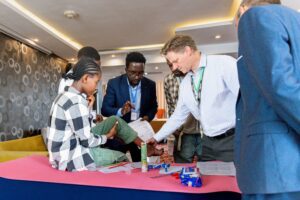
Historically, these older children were treated with major reconstructive surgeries or lived with permanent physical limitations and social stigma.
However, over the last 10 years, CURE Ethiopia has adopted the technique popularised in Ethiopia by Dr. Birhanu Ayana at Black Lion Hospital.
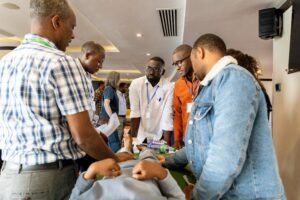
This technique uses the principles of Ponseti’s technique and extends them to provide a treatment protocol for older children :
- Serial manipulation and casting for primary foot deformity correction.
- Minimally invasive surgery to address residual ankle deformity.
- Strategies to prevent recurrence, such as Tendon transfer surgery or bracing.
A Multi-National Faculty and Participant Group
The course was funded by the Global Clubfoot Initiative RunFree Accelerator Project, which convened a group of 21 experienced orthopedic surgeons and physiotherapists. 15 participants represented various regions across Ethiopia, as well as specialists attending from Kenya, Somalia, Uganda, and Cameroon.
The training was organized by CURE Ethiopia and supported by a distinguished faculty, including:
- Dr. Birhanu Ayana (Black Lion Hospital /Hope Walks Medical Director).
- Dr. Chelsea Shikuku (CURE Kenya) and Dr. Ararso Gonfa (CURE Ethiopia), both of whom served as trainers following their Train-the-Trainer (TTT) certification, underscoring the program’s commitment to sustainable local expertise.
- Nicholas Veltjens (Mercy Ships) and Debra Mudariki (GCI) provided specialized physiotherapy and educational perspectives.

Curriculum and Measurable Outcomes
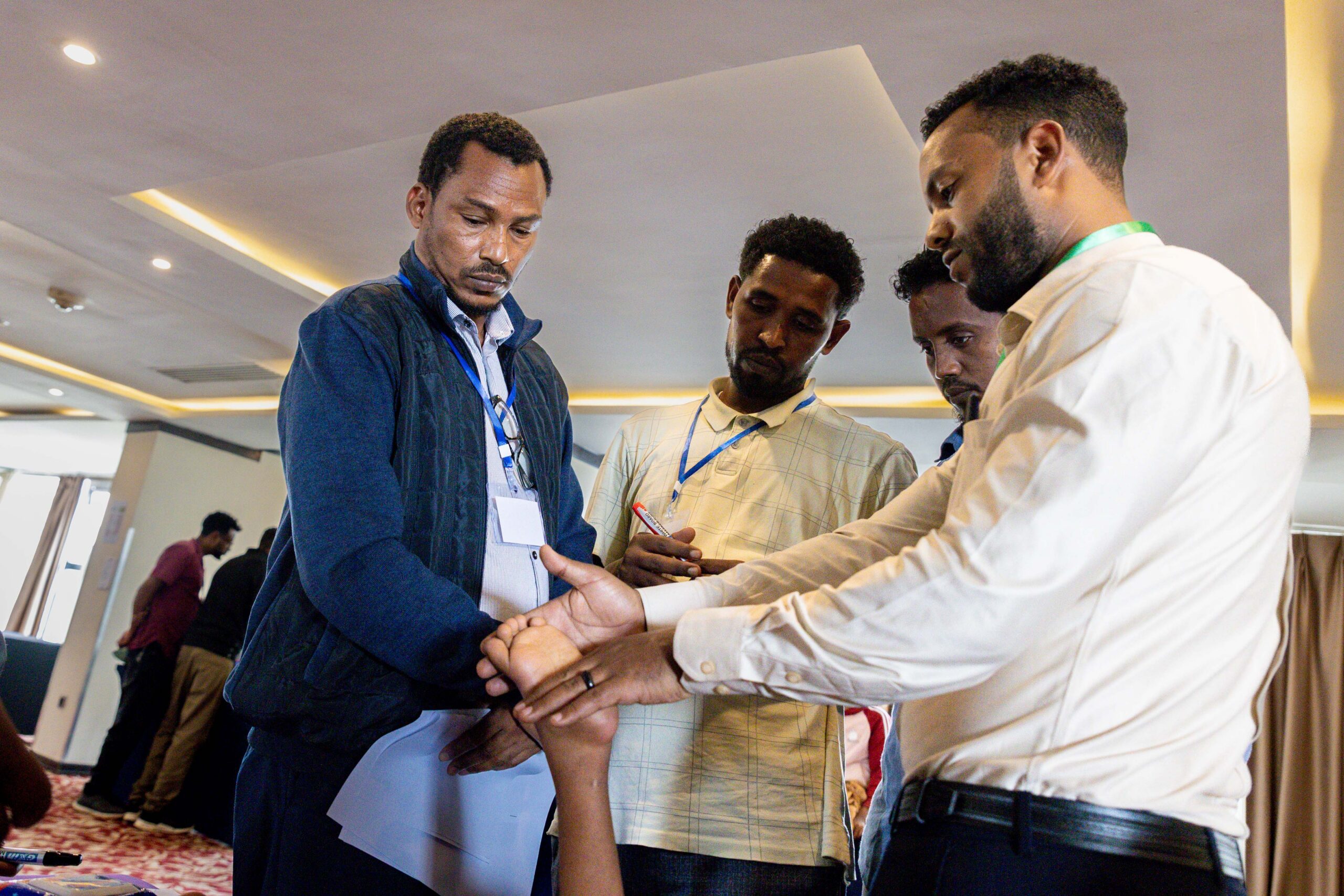
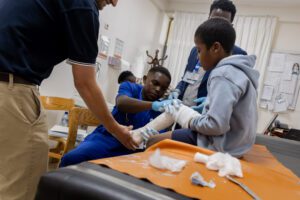
The curriculum integrated theoretical lectures with practical workshops at CURE Ethiopia, focusing on assessment and casting.
The efficacy of the training was evidenced by significant improvements across all primary assessment metrics:
- Cognitive Knowledge: Average multiple-choice scores increased from 7.2/10 to 9.0/10.
- Technical Proficiency: Practical foot model assessments showed an improvement in skill application (rising from 2.7/4 to 3.3/4).
- Clinical Confidence: Participants reported a marked increase in confidence levels, moving from an average of 3.56/5 to 4.74/5.
Institutional Impact and Future Directions
The DPC course represents more than a singular event; it is a collaborative effort between Oxford University’s Nuffield Department Of Orthopaedics, Rheumatological and Musculoskeletal Sciences, Global Clubfoot Initiative, and CURE Ethiopia to transform specialized medical expertise into actionable regional practice.
By equipping regional practitioners with these proven techniques, the program ensures that older children with Delayed Presentations of Clubfoot deformities can achieve the mobility required for education and social integration.
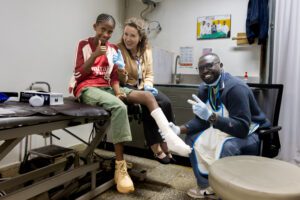
As these practitioners return to their respective centers, CURE Ethiopia and Global Clubfoot Initiative remain committed to ongoing mentorship. Zoom case discussions will be conducted, and a professional network will be fostered to support surgical decision-making and optimize long-term patient outcomes.
Donate to CURE Ethiopia to support free, life-changing surgeries, training for local leaders, and efforts to break the stigma of disability. Contributions bring medical care and hope to children in need.
About the CURE Children’s Hospital of Ethiopia
Established in 2008, CURE Ethiopia performs over 2,500 life-changing reconstructive and orthopedic surgeries every year for children suffering from treatable disabilities. Strategically located in the capital city of Addis Ababa, the teaching hospital has 70 beds and four operating rooms. CURE International uses this facility to multiply its efforts by partnering with The College of Surgeons of East, Central, and Southern Africa (COSECSA) to serve as a regional learning institution by implementing an orthopedic pediatric training program at the residency and fellowship levels. In addition to world-class clinical service, CURE Ethiopia ministers to the emotional and spiritual needs of patients and their communities.